

Eatventure Mod APK v1.53.2 (Unlimited Money)

|
apps App Name |
Eatventure |
|
update Last Updated |
Aug 11, 2026 |
|
numbers Version |
1.53.2 |
|
sd_card Size |
132 MB |
|
category Category |
Simulation |
|
play_arrow Google Play Link |
 |
Mod Info
– Unlimited Money
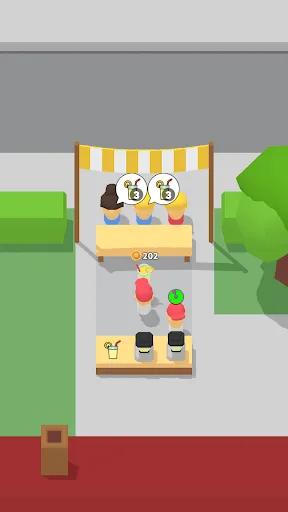
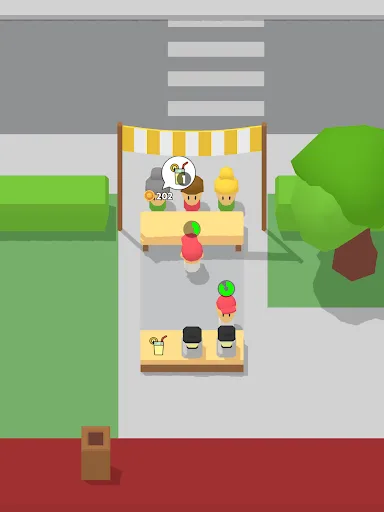
A tiny lemonade stand is where the day begins in Eatventure. Customers arrive, orders appear, and your character moves around preparing food and collecting payment. The money earned from those early sales becomes the reason to keep working on the business rather than simply watching it run.
As the operation grows, the surroundings change with it. A modest setup can become a more developed restaurant, with new places to serve customers appearing as progress continues. Each new location shifts the setting without changing the basic rhythm of running a food business.
Watching the restaurant come to life
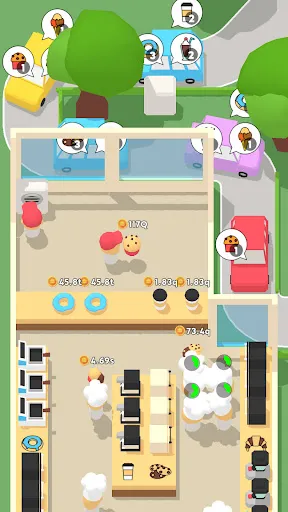
There is a constant sense of activity once the restaurant has several stations running. Customers move through the space while workers handle different parts of the service. Your character remains involved in the operation, especially when the business is still developing.
A new station can change how the restaurant behaves. Food that once took up most of your attention may become easier to manage after an upgrade. When another worker takes over a task, you have more room to concentrate on improving the business itself.
The visual feedback is important here. You can see where work is happening and notice when a particular part of the restaurant is holding things back. Rather than dealing with menus full of technical settings, much of the progress is represented directly through the small restaurant scene.
Turning earnings into progress
Money earned from customers does not simply accumulate. It is spent on improvements that change how the restaurant operates.
Suppose one station is responsible for a large part of the day’s income. Improving it can make that part of the operation move faster. Once another station becomes more important, your attention can shift there. The restaurant gradually becomes more capable as these decisions accumulate.
Hiring workers changes the feel of the business as well. A cook can take over food preparation, while a cashier can handle payments. Tasks that previously depended on your character can increasingly happen on their own.
That creates a changing balance between direct involvement and automation. Early progress requires more attention to individual jobs. Later, the restaurant can keep producing money while you concentrate on its next improvement.
Moving into bigger businesses
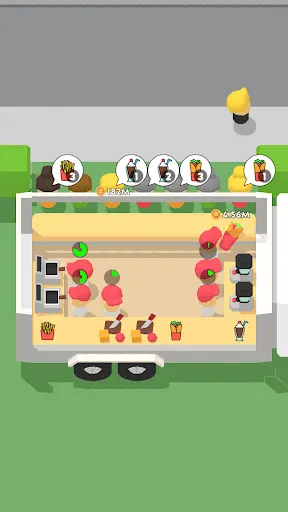
Progress eventually takes the player beyond the original lemonade stand. Food trucks, cafés, diners, and drive-through businesses form part of the wider journey.
Each stage gives the same basic economic idea a different setting. You arrive with a business that needs work, begin earning from customers, and spend those earnings to improve its operation. As the location develops, the amount of activity on screen grows with it.
There is also a sense of moving from one business challenge to another. Once a restaurant has become efficient enough, there is less reason to remain focused on its earliest problems. The next location becomes the place where your attention is needed.
Building a more automated operation
Automation becomes increasingly noticeable as the restaurant develops. Instead of manually handling every part of service, workers begin carrying out jobs around you.
This changes what the player watches for. You may notice that one station is producing slowly while another is keeping up with demand. An upgrade can alter that balance. A worker can remove another task from your workload. The result is a restaurant that increasingly continues operating without constant intervention.
Equipment and character items also contribute to progression by improving the player’s capabilities. These additions give another reason to consider how the character is equipped as the business becomes larger.
Events add a different reason to play
The regular restaurant progression is not the only activity available. Events introduce alternative situations where progress can be pursued outside the normal business journey.
Leaderboards can also put progress in a more competitive context. Instead of only considering how far your own restaurant has developed, you can compare your results with other players.
These activities sit alongside the ordinary restaurant loop rather than replacing it. The main business remains the place where money is earned and improvements are made, while events offer another target when you want something different to work toward.
A bright, simplified restaurant world
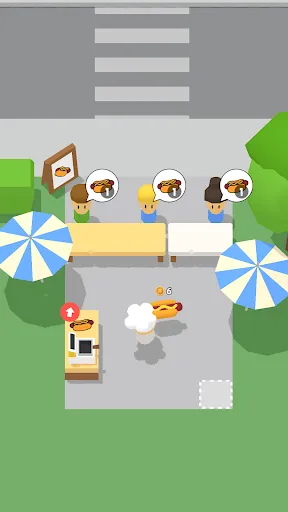
The presentation uses a cartoon-like style with compact environments and small characters. Food stations and equipment are drawn with clear shapes, making it easy to recognize what is happening without realistic detail.
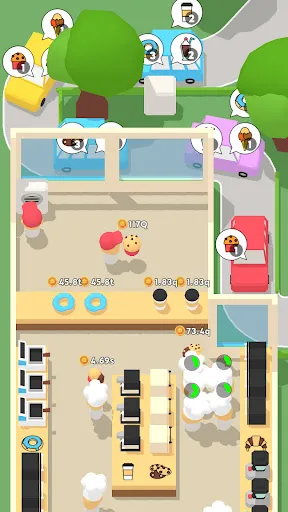
Restaurants gradually become busier as they develop. Characters move between stations, customers arrive, and food preparation takes place in the same small spaces. The visual design keeps these activities easy to follow even when several things are happening at once.
That simplicity also suits the game’s management focus. A player can look at the restaurant and quickly understand which parts are active and where the next improvement might be needed. The result is a light, colorful view of restaurant management where growth is shown directly through the changing business around you.